

Péter Magyar Gave a Live Tour of the Carmelite Monastery
“I warmly welcome everyone from in front of the Carmelite Monastery,” said Péter Magyar during a live broadcast from
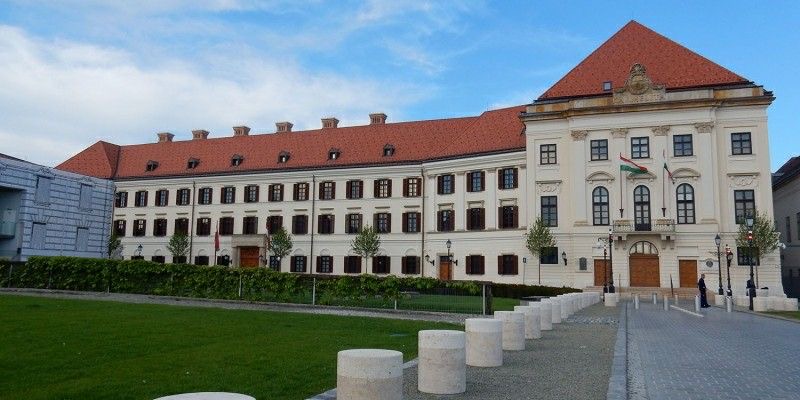
“I warmly welcome everyone from in front of the Carmelite Monastery,” said Péter Magyar during a live broadcast from the Carmelite building on Monday evening. The prime minister, officially elected on Saturday, had already announced after the April 12 election that “under the TISZA government, the prime minister’s office will not be located in the Carmelite Monastery, but in a ministry building near Parliament.”
Péter Magyar arrived at the Carmelite together with György Velkey, Anita Orbán, and several ministers, including Dávid Vitézy. He explained that they had gone there for several reasons, one of them being that caretaker ministers were still undertaking financial commitments despite earlier instructions and warnings not to do so.
“As far as I understand, the building is empty,” Magyar said, noting that a state secretary had only recently left the premises. Referring to the financial commitments, he recalled that he had recently instructed caretaker ministers to provide him with information about all such obligations by 10 p.m. Monday evening.
Magyar also said they visited the Carmelite because the building had become a symbol of extravagance and hate propaganda. “We will definitely not move in here,” he stated later, adding that his government intended to manage public resources far more responsibly.
He further revealed that discussions had already taken place on Monday regarding the future locations of ministries. “We will return tomorrow, because the Sándor Palace is here as well. I will come here tomorrow at 1 p.m. to meet the President of the Republic, who will appoint the ministers of the TISZA government,” said Magyar. He added jokingly that they had “asked him not to take photos with the ministers of the TISZA government.”
According to Magyar, the first cabinet meeting would already take place on Wednesday, most likely in Budapest, while state secretaries would be officially appointed by Friday.
The group then entered the Carmelite building, where, according to Magyar, nobody remained except the security staff. He showed viewers where cabinet meetings had previously been held and emphasized once again that his government would not operate from the Carmelite. Standing in the meeting room, he repeated that, as far as his administration was concerned, no government meetings would be held there in the future.
Afterward, they visited Viktor Orbán’s office before entering the “Tisza Room,” named after Kálmán Tisza and István Tisza. “Well, yes, life is the greatest screenwriter,” Magyar remarked. “Practically this entire wing belonged to the prime minister,” he added while continuing the tour.
Quoting from an underlined passage in a Bible left behind in the office, Magyar read: “Let the living know that the Most High rules over the kingdoms of men and gives them to anyone He wishes, and sets over them the lowliest of people.” He then picked up a manual for a document shredder lying beside it.
“Here is the famous or perhaps infamous globe featuring a map of Greater Hungary,” Magyar said as the tour continued. Although he did not examine all the books on the shelves, he noted that there were probably valuable rarities among them.
The group also entered the Carmelite’s theater hall, where, according to Vitézy, internal government consultations and press briefings had often been held. TISZA Party campaign chief Péter Tóth was also present in the building, despite announcements made in late April suggesting that he would soon return to civilian life.
“Quite atmospheric only some soft music is missing,” Magyar joked while stepping into the building’s inner courtyard. He also briefly stopped by the former office of Deputy Prime Minister Zsolt Semjén, where he spoke about tambura playing children from Sükösd.
Magyar further stated that, according to his information, “President Toroczkai wanted to coordinate by phone with Zsolt Nébl.” He publicly told Toroczkai that he and “all of his representatives should be ashamed,” adding that they should “not merely pretend to hunt corruption, but stand up publicly and apologize” for walking out of the chamber.
Finally, Magyar announced that future government press briefings would differ significantly from the previous format. Information would be communicated “in different forms and with a different tone,” not only by government spokespersons, but also directly by ministers and the prime minister himself, who, he promised, would remain available to the press.