
US-Iran War Escalates as Washington and Tehran Exchange Heavy Strikes
The conflict between the United States and Iran has entered a dangerous new phase, with Washington and Tehran exchanging







The conflict between the United States and Iran has entered a dangerous new phase, with Washington and Tehran exchanging their most intense attacks in weeks and fears growing that the fighting could develop into a much wider regional war.
After a month-long lull in direct military action, the United States launched a new wave of strikes against Iranian military targets. Washington said the attacks focused on Islamic Revolutionary Guard Corps facilities, air-defense systems, radar installations, maritime assets and Iran’s ability to deploy mines in the strategically vital Strait of Hormuz.
Iran responded with missile and drone attacks against U.S. military positions and American allies across the Middle East. Iranian forces targeted locations in Bahrain, Jordan, Kuwait and Iraq, while Jordanian and Bahraini authorities reported intercepting incoming missiles and drones. U.S. officials disputed Iranian claims of significant American casualties.
The Strait of Hormuz at the Center of the Conflict
One of the biggest concerns is the Strait of Hormuz, a narrow waterway through which a substantial share of the world’s oil supply passes.
The United States says Iran has been attempting to lay naval mines in the area, threatening international shipping. Washington has responded by targeting Iranian military infrastructure associated with those operations.
The renewed fighting has already affected global energy markets. Brent crude has risen to around $95 per barrel, more than 30% above its level at the beginning of the war.
Any prolonged disruption in the Strait could therefore have consequences far beyond the Middle East, potentially pushing up fuel prices, transportation costs and inflation around the world.
Civilian Casualties Fuel Anger
The latest escalation has also been accompanied by reports of civilian deaths.
Iranian authorities say a U.S. strike hit a location where a wedding was taking place in southern Iran. Iranian officials reported that several civilians, including children, were killed and dozens were injured.
Iran has described the incident as a possible war crime and called for an international investigation. The United States, however, says it was targeting Iranian military infrastructure and denies deliberately targeting civilians.
The conflicting accounts have added another layer of tension to an already volatile conflict.
Trump Rejects the Idea of Backing Down
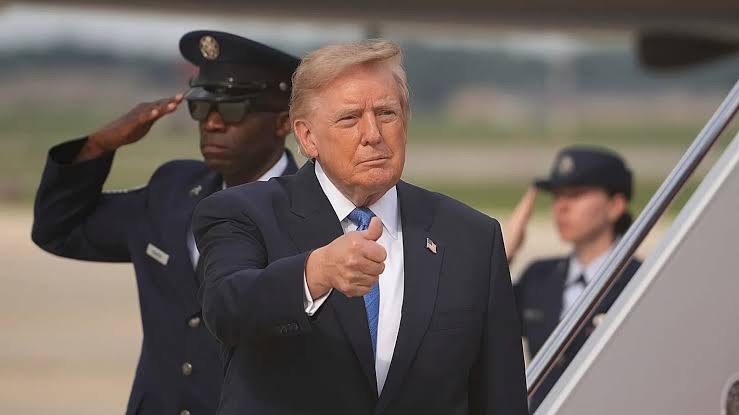
U.S. President Donald Trump has taken an increasingly hard line toward Tehran.
The Trump administration says its objective is to prevent Iran from developing nuclear weapons and to weaken its ability to support armed groups across the region. Secretary of State Marco Rubio said Iran would continue to face pressure until it abandons ambitions for a nuclear weapon and ends its support for regional militant organizations. Iran has consistently maintained that its nuclear program is peaceful.
Trump has also signaled that Washington is not currently looking for an immediate negotiated settlement, instead arguing that the United States maintains the upper hand militarily.
Iran Under Growing Economic Pressure
Military losses are not the only challenge facing Tehran.
The Iranian economy has been placed under enormous pressure by the conflict and U.S. sanctions. According to recent reporting, Iranian oil exports have fallen dramatically, while inflation and economic instability have worsened.
At the same time, Iran still retains the ability to threaten American forces and regional infrastructure, meaning Washington has not achieved a decisive end to the conflict despite its military superiority.
The Risk of a Wider Regional War
The most worrying development is that the conflict is no longer limited to American and Iranian territory.
Iranian attacks have reached U.S. military facilities and American allies across the Gulf and neighboring countries. Saudi Arabia has also accused Iran of attacking an oil tanker, an incident that reportedly killed two Filipino crew members.
Israel and Hezbollah have also remained involved in the wider regional confrontation, raising concerns that additional countries and armed groups could become directly involved.
China, Pakistan and several Middle Eastern governments have called for de-escalation and a return to negotiations.
What Happens Next?
The immediate future remains uncertain.
The United States appears determined to maintain military pressure on Tehran, while Iran has demonstrated that it can still retaliate against American forces and disrupt vital regional infrastructure.
The biggest question is whether the latest exchange of attacks will remain a limited escalation or become the beginning of a new and more destructive phase of the war.
For now, diplomacy appears distant, the Strait of Hormuz remains a major flashpoint, and global markets are watching closely.
After months of fighting, the conflict has entered another critical moment — one in which a single military strike could potentially trigger consequences far beyond the borders of the United States and Iran.