
Exclusive Interview with Gábor Kubatov: Will He Remain President of Ferencváros After Resigning from All His Positions at Fidesz?
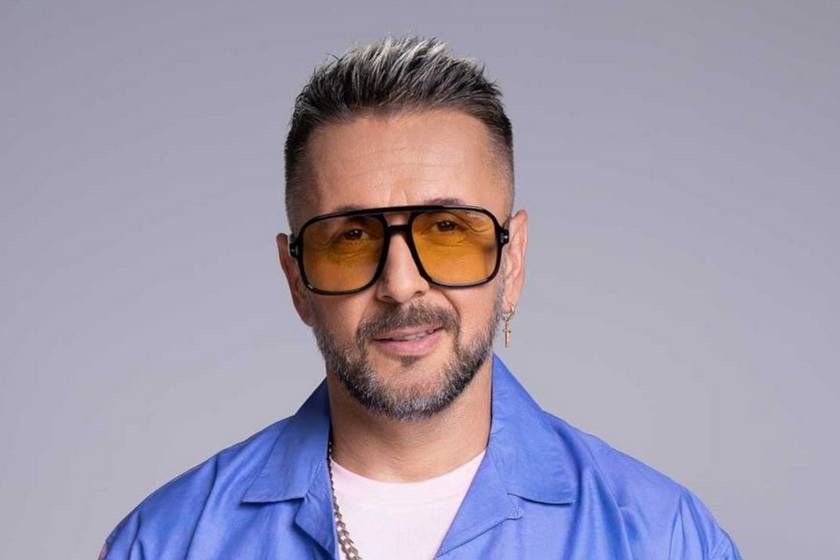
Gábor Kubatov, president of Ferencváros, former party director and vice president of Fidesz, spoke out for the first time
Gábor Kubatov, president of Ferencváros, former party director and vice president of Fidesz, spoke out for the first time in a long while about the complaint surrounding the Fradi City project, the highly uncertain future of the green and white club, and the election defeat.
– These days it is becoming increasingly difficult to separate sport and politics. To what extent does a change of government affect Ferencváros?
Gábor Kubatov: We do not know exactly yet, because our budget is structured season by season, and it is impossible to know precisely what intentions the new government will have. Fortunately, I have a particularly good relationship with the new State Secretary for Sport. I believe there is mutual respect between us. We will have a meeting in the summer where we can clarify at least the main directions.
– Can the financial loss caused by the Tisza Party’s victory be measured in money?
Gábor Kubatov: I do not think so. Many things are involved in our budget. For example, we do not know whether there will be a so called “Hungarian player rule.” We have one or two disputed players who took the citizenship oath last year and became Hungarian citizens, but it is possible that next season they will no longer qualify as Hungarian players.
There would be no problem with that in itself, but I have a principled position that retrospective legislation is not fair. This applies both to politics and to sport.
Another similarly problematic issue, in our opinion, is the distribution of revenue from television broadcasting rights. If 29 of the 30 most watched televised matches of last season were Ferencváros games, why should we receive the same amount of broadcasting money as, for example, Zalaegerszeg?
And we have not even mentioned support from the Hungarian National Lottery Company or MVM.
There are nearly 3,000 athletes at the club, with around 300 coaches. That means 300 families. I cannot tell them now that perhaps the expected funding will arrive, and perhaps it will not.
– Where will you need to tighten the budget?
Gábor Kubatov: In football, we will have to reduce our squad of more than forty players to around thirty.
Over the years, we invested money in players, bought them relatively cheaply, tried to loan them out, develop them, and then make money from them. It was a successful business model.
Since working with Tamás Hajnal, we have generated a total of €13 million, or around 4.6 billion forints.
– You mention football, but Ferencváros has several other successful departments: the men’s water polo team are multiple Champions League winners, the women’s team reached the Final Four this year, and the women’s handball team has also been close to reaching the Champions League Final Four for years. Can these teams continue operating at this level?
Gábor Kubatov: Their budgets are clearly defined and supported by sponsors, so I do not think there is an issue there.
I would be surprised if the new government’s idea was that the national pride created by Ferencváros’ water polo team was unnecessary, or that the pride brought by the women’s handball team was not needed especially since a significant part of that team also forms the backbone of the Hungarian national handball team.
– Let us turn to the Fradi City project. The State Audit Office forwarded a complaint to the police over suspected mismanagement regarding the project, which had previously been submitted by a Ferencváros supporter. The Fradi City project was ultimately not completed despite receiving 25 billion forints in state support.
Gábor Kubatov: The situation is that people talk about Ferencváros as if it were some kind of amateur club. Ferencváros has a very serious supervisory board, and they always take their responsibilities seriously.
It is not as if I can simply walk in and do whatever I want with the money.
Regarding Fradi City, all I can say is that it was an excellent project. Perhaps the biggest disappointment is that we were unable to carry it out.
There was extremely serious preparation behind it. We spent years consulting with the different departments about what they needed. We created a rational plan with a highly respected design office, serious legal experts, and extensive consultations with the capital.
In reality, only about three months of work would have been needed to complete the final construction plans. However, because the European economy ended up in such a difficult situation due to the war, all Hungarian developments without an officially opened construction log were stopped.
We did not have one, so we could not complete the project.
But every single forint spent on Fradi City remains within Ferencváros, exactly as the Hungarian state provided the funding.
That is why I can face any investigation or inquiry with a clear conscience and complete transparency. Neither I, the supervisory board, nor the leadership of Ferencváros will have any problems because of this.
– Let us clear up the circumstances surrounding head coach Robbie Keane’s departure.
Gábor Kubatov: We had a very honest conversation with Robbie about the possibilities. We told him that this year he would have to work with a smaller squad and reduced wage costs.
We cannot pay transfer fees; we can only sign players who are available for free. He had to decide whether he wanted to stay with us under these circumstances or not.
We should look at the situation from his perspective as well, because that is an interesting viewpoint. He was an excellent coach in Israel, where he won a championship. Then he came to Hungary and won the Hungarian league title and the Hungarian Cup.
His coaching career is moving upward, and it cannot be interrupted now. Therefore, he decided to leave.
He was very sad about it. He loved Budapest, the club, and the supporters, but ultimately his decision was understandable.
– Let us talk about you personally. There will be leadership elections at Ferencváros in the autumn, and reports suggest you will run again for president. Do you love the club enough that, if the club’s interests required it, you would step aside? For example, if an investor came with billions of funding but wanted to become president of Ferencváros?
Gábor Kubatov: The interests of Ferencváros have always come first for me.
If it was in Ferencváros’ interest to have a suitable owner, sponsor, or person take this position someone worthy of the role then of course I could step aside.
– In politics, you have already done this: at the Fidesz congress, you resigned from your positions as party director and vice-president. Why?
Gábor Kubatov: Because I have been working in this service for 25 years, and during that time I have never taken more than a week of holiday.
I reached the end of my strength, and I believe leaving politics in a way that is not a betrayal of a community can be done gradually, cycle by cycle.
Many things influenced my decision. I am 60 years old, and I would like to spend some more time at Lake Balaton and the Adriatic.
I have 100 books next to my bed that I have saved for later and would like to read. I still cannot ice skate, so I have many things I want to do.
– What did Viktor Orbán say when you told him about your decision?
Gábor Kubatov: We had a very good conversation, and he accepted my decision.
I feel liberated and relieved from the whole situation. It is completely unusual for a person to have days when there is no responsibility, nothing happening, and no time pressure on them.
– Returning to the election: have you figured out what was behind Tisza’s overwhelming success?
Gábor Kubatov: I think there are many reasons.
First of all, we always have to look for mistakes within ourselves.
I do not want to analyse it now, but one thing is certain: a technological change happened in politics that we either did not recognise or did not respond to properly.
That was the impact of social media. They were better and more effective in that area.
– So are the so called Kubatov lists outdated? Has social media replaced them?
Gábor Kubatov: I like it when people talk to each other and when there are personal relationships.
The big question is whether people still want that, or whether conversation has become limited to social media.
These are things we need to think about and research.
– From the outside, it appears that Fidesz has not yet become comfortable in the role of opposition. For example, during the live broadcast of the government handover, former ministers seemed to silently endure insults like frightened children…
Gábor Kubatov: I think it was the correct approach, because Hungarian patriots were standing there.
They did not shout, they did their work, and delivered what needed to be delivered.
Many people talk about that, but very few talk about the fact that the transition happened completely and without problems.
I think it was a good strategy because there is a line that should not be crossed.
I felt most sorry for the Interior Minister, Sándor Pintér, who since the political transition has taken some of the biggest steps toward restoring public safety, and yet he was treated this way.
While criminal gangs operate in Belgrade and drug mafias exist in Vienna, Budapest remains one of the safest places to live and that is partly the achievement of Sándor Pintér.
– You resigned from your political positions, and you now serve as Ferencváros president on a voluntary basis. How will you make a living?
Gábor Kubatov: I have many offers and interesting ideas.
I do not want to serve another political party, although there would be political opportunities as well, so for now I am waiting.
Over 25 years, a person learns many things. I also have business ideas, but I am still waiting.
There are those 100 books I mentioned earlier first, I want to get through those.