


Bridges of Hungary: Where Engineering Meets History
Hungary’s landscape is quietly defined by its bridges structures that do far more than carry traffic across rivers. They
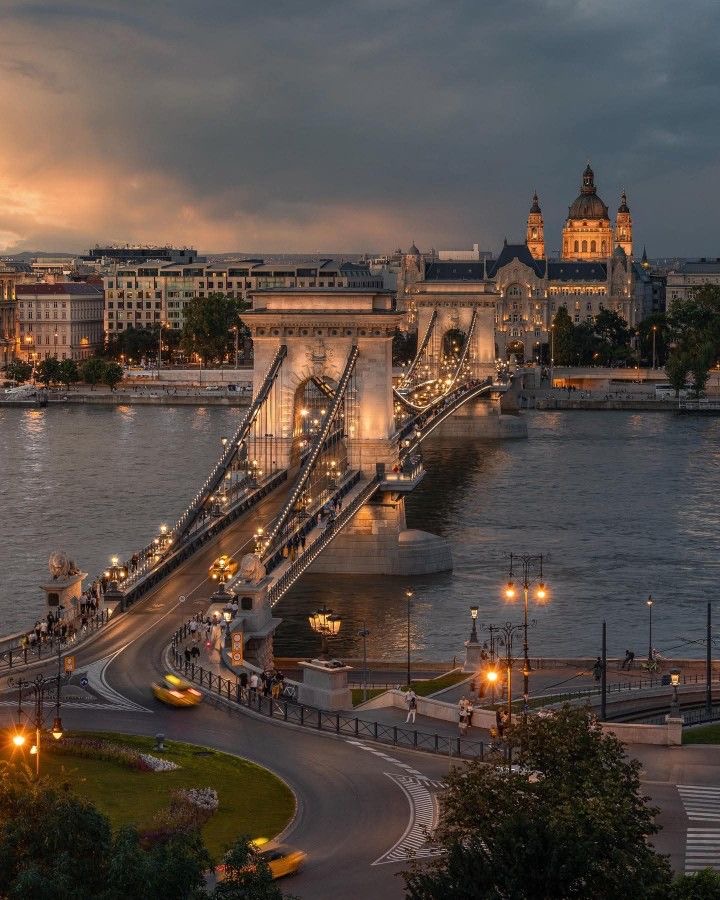
Hungary’s landscape is quietly defined by its bridges structures that do far more than carry traffic across rivers. They connect eras, cultures, and architectural styles, telling stories of resilience, innovation, and national identity. From the iconic spans of Budapest to lesser known rural crossings, Hungarian bridges form an essential and fascinating part of the country’s heritage.
At the heart of Hungary’s bridge culture lies the Danube River, which cuts the nation in two and has historically shaped its development. Nowhere is this more evident than in the capital, Budapest, a city famously unified in 1873 from Buda and Pest. The need to connect these two sides gave rise to some of Europe’s most striking bridges.
The Széchenyi Chain Bridge, completed in 1849, stands as a symbol of progress and unity. As the first permanent bridge across the Danube in Hungary, it revolutionized transportation and commerce. Designed by English engineer William Tierney Clark and constructed by Scottish engineer Adam Clark, the bridge combines neoclassical elegance with industrial ingenuity. Its stone lions quietly guarding each end have become cultural icons in their own right.
Not far from it, the Parliament building’s silhouette is perfectly framed by the Margaret Bridge, a graceful structure with a unique angular design that connects not only Buda and Pest but also Margaret Island. This bridge, rebuilt after its destruction during World War II, reflects Hungary’s ability to restore and preserve its architectural heritage even after immense hardship.
Another standout is the Liberty Bridge, with its distinctive green iron framework and Art Nouveau detailing. Originally built for the 1896 Millennium Exhibition celebrating Hungary’s thousand year history, it remains one of the most visually striking crossings in the country. Today, it serves not only as a transport route but also as a social space, often closed to cars during summer weekends and filled instead with pedestrians enjoying panoramic views of the city.
Beyond Budapest, Hungary’s bridges continue to impress in quieter ways. In towns and villages, smaller spans cross rivers like the Tisza and Dráva, blending functionality with regional character. The Tisza bridges, in particular, are vital lifelines in eastern Hungary, where waterways have historically shaped settlement patterns.
Modern Hungary has also embraced contemporary bridge design. The Megyeri Bridge, opened in 2008 on the northern edge of Budapest, showcases sleek cable stayed architecture and represents the country’s forward looking infrastructure development. Its clean lines and illuminated cables at night provide a striking contrast to the historic bridges closer to the city center.
Yet, Hungarian bridges are not just feats of engineering they are deeply woven into the nation’s cultural fabric. They appear in literature, films, and everyday life as symbols of connection and continuity. Whether illuminated at night or silhouetted against a sunset, they offer moments of quiet beauty that resonate with locals and visitors alike.
In a country where history has often been marked by division and rebuilding, bridges carry a special meaning. They remind us that connection between places, people, and past and future is always worth building.
As Hungary continues to grow and modernize, its bridges stand firm as both functional infrastructure and enduring works of art. Crossing them is not just a journey across water, but a passage through time.